
Europe
(171)
Italy
(59)
France
(21)
Germany
(21)
United Kingdom
(17)
Spain
(16)
Austria
(8)
Czech Republic
(6)
Greece
(5)
Switzerland
(4)
Finland
(3)
Netherlands
(3)
Portugal
(3)
Belgium
(2)
Malta
(2)
Slovakia
(2)
Albania
(1)
Bulgaria
(1)
Croatia
(1)
Cyprus
(1)
Denmark
(1)
Hungary
(1)
Ireland
(1)
Norway
(1)
Poland
(1)
Romania
(1)
Slovenia
(1)
Sweden
(1)

Discoveries in the Duero
28 Jan 2026
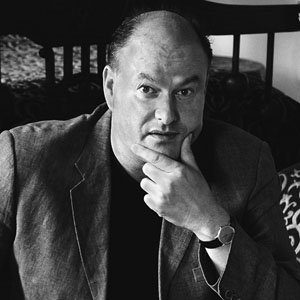
The historian and hispanist Gijs van Hensbergen, leads a tour of the River Duero region, on terra firma, from Soria to Porto. It’s a part of Spain he has long wanted to share.
Why is this region so important to you?
I’ve lived in the area for 40 years. I feel very much part of village life and the intellectual life here as well. It’s my habitat. The philosopher Miguel de Unamuno described the River Duero as the ‘Conscience of Spain’. There have been some extraordinary historical events that took place along its banks. And the landscape around it is stunningly beautiful. You can do the history of Spanish literature through the river. El Cid, El cantar de mio Cid is believed to be written on the banks of the Duero. Yet, this whole area in the centre of Spain is little known. There are incredible, world-class masterpieces to be found in every town – art worthy of the Prado.
Tell us about the history of the region?
There is so much. Numancia, which we visit early on, is the site of the last stand of the Celtiberian tribes in 133 bc. Scipio Africanus who had just razed Carthage, surrounded the city walls and starved the inhabitants to death. Eventually the Celtiberian leader Viriato set himself on fire and threw himself over the walls. It was a Pyrrhic victory – and its legacy is so important in the Spanish psyche that both the Republicans and the nationalists had a Numantine brigade during the Spanish Civil War.

The cloisters of San Juan de Duero, Soria.
For 300 years the Duero was a kind of barrier between the Christian world to the north and the Arab world to the south. After Berber revolts in the early 8th century, the Christian kings of Asturias came and laid waste to the whole area. There are towns and cities that passed between the Arabs and the Christians five or six times in a century. I’m thinking particularly of Zamora. We have this fascinating window into a millennial anxiety in this period, where the constant fear of the other side actually creates some amazing things.
There’s a wonderful romance and beauty to the landscape, too, that is well captured by the great 19th-century poet, Gustavo Adolfo Bécquer. His poems are full of stories about watching the moon across the Duero and the Mountain of Ánimas, where the dead souls of Templar knights guard the waters. We start off the tour in the mountains, in Soria not far from the river source. At San Juan de Duero, the amazing interlacing cloisters set the tone.
Castle Gormaz
What unexpected sites will we encounter on the tour?
One surprising treasure is just outside the Arab castle of Gormaz, the largest castle in Europe, even larger than Krak des Chevaliers. In the castle footskirts, there’s a tiny little ermita. Inside, beneath flaking paint was discovered, only about 15 years ago, an incredible set of apocalyptic murals of Saint John’s visions. It’s as fresh as if it was painted yesterday.
The monastery at Santo Domingo de Silos, has in my view the most beautiful Romanesque cloisters in the world; I rate the master sculptor here as highly as I do Donatello or Michelangelo. But we don’t know who he was. Was he a Byzantine journeyman? Or the grandson of someone who’d been working in the Arab palaces in Córdoba? The quality is just utterly astonishing.
Then there is the exceptional full set of gold and silver tapestries at Zamora, made in the late 15th century by Willem de Pannemaker, the ultimate Antwerp producer (another set was bought by Henry VII of England and has largely disappeared). I remember years ago, going into that room with a client, Sir Roy Strong, former head of the V&A, and he just burst into tears at the sight of them.
And again, in very quiet, sleepy Zamora, my latest discovery is a mikvah and a beautiful synagogue within a Christian palace, which was clearly taken from the rabbi during the Inquisition.
As a gastronomist what can you tell us about the food?
We’re going to have the first wild asparagus barbecued, sprinkled with salt and fantastic olive oils, artichokes and lots of delicious egg dishes. Of course, there are the roasts, the great lamb and suckling pig roasts and some heartier dishes. But we are on a river. So there will be some superb fish. We’re going to be eating trout. When we’re up in the mountains it’s game. We might have a little partridge salad. And once, of course, we get down to Porto, it changes totally again. And the food becomes far more exotic. It is all going to be delicious.
‘The Duero River: from source to sea’ runs for 10 days from 13–22 April 2026. Book now on our website.
'Still Life of Asparagus' by Adiaan Coorte, 1699. Ashmolean Museum, Oxford
Meet our expert speaker
Sign up to our e-newsletter
e-newsletter recipients are the first to hear about our future plans and our tours as they come on sale. By signing up you agree to our Privacy policy.




My Wishlist
Please note that all saved tours will be removed if you clear your cookies.